
Core & Spinal Stability
Each of my core programs is designed to train your core as a complete system — not just your abs.
That means you’ll work multiple functions of the core, including bracing, stabilization, rotation, anti-rotation, lateral stability, and control through movement. So even if you choose just one program, you’re getting a well-rounded approach to building strong, functional core strength.
But for the most complete approach, I recommend alternating between several programs.
If you have two programs, simply go back and forth between them. If you have three, rotate through 1, 2, 3 and then start again.
Why?
Because while the programs train many of the same core muscles and functions, they do it through different exercises, positions, angles, loads, and ranges of motion. That means your core has to stabilize, brace, resist movement, and produce movement in slightly different ways each time.
All that matters.
Your core doesn’t have one job. It has to keep your spine and pelvis stable, control rotation, resist unwanted movement, transfer force between your upper and lower body, and create controlled movement in multiple directions.
Training those functions through a wider variety of positions and movement patterns builds a more adaptable, capable core than repeatedly performing the same handful of exercises.
Think of each program as a different piece of a bigger core training system. One program gives you a complete workout. Cycling through several gives you greater variety in how you build total core strength, stability, endurance, and control.
This is exactly how I approach my own core training, too.
I alternate between different core workouts so I’m continually challenging the same muscles and functions in different ways, because a truly strong core should be able to stabilize and control your body from every angle.
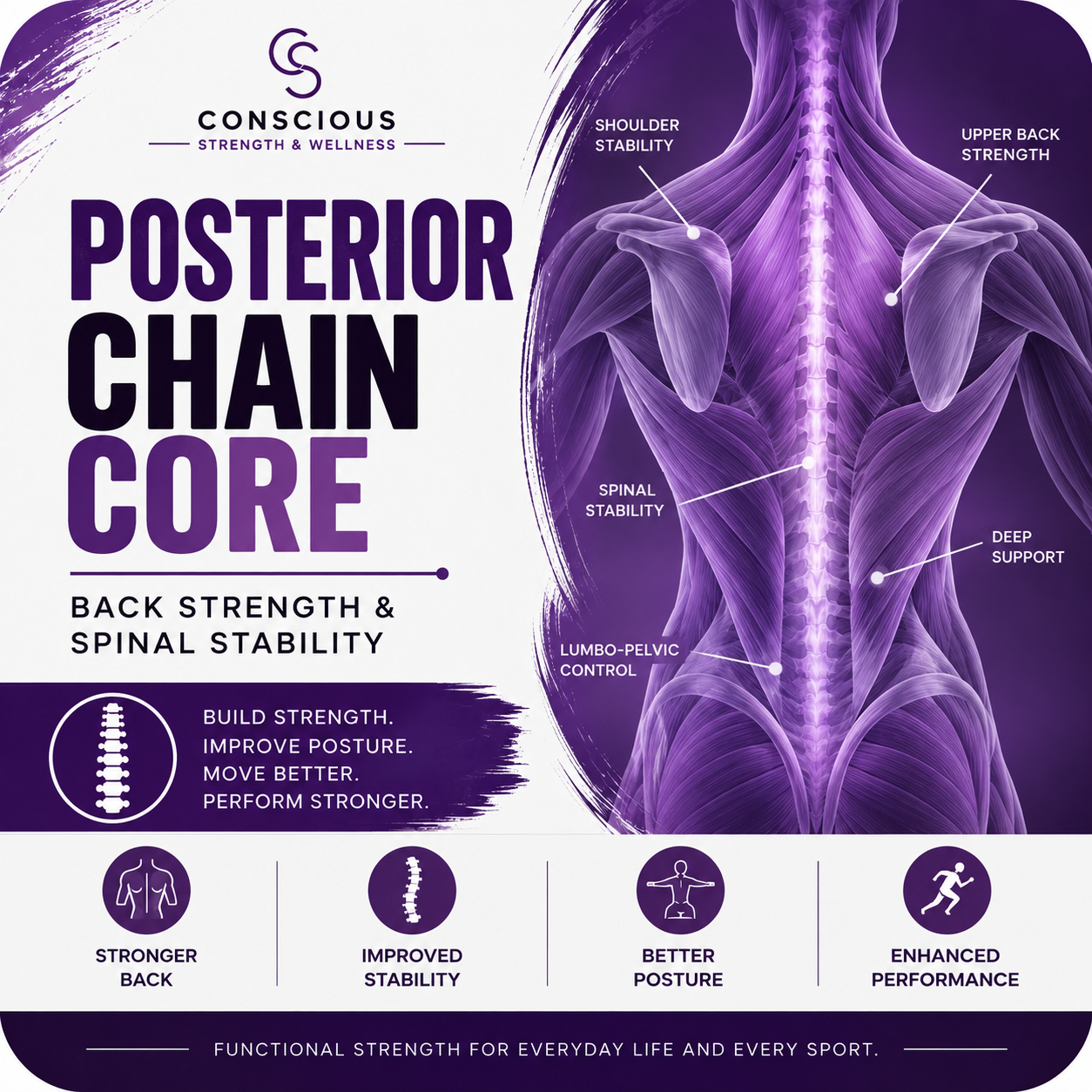
This program strengthens your posterior core. Specifically targeting your spinal erectors, upper back, and rear shoulders. Your spinal erectors are the pillars of your entire posture; keeping them healthy is essential for total spinal health, preventing chronic back fatigue, and building a pain-free foundation for movement.
This program directly eliminates shoulder pain and maximizes shoulder strength by giving your shoulder blades the stable, upright platform they need to move safely.
You’ll gain:
Relief from stubborn shoulder pain and upper back aches
Upgraded postural health to stand taller and resist gravity
Explosive shoulder and overhead lifting strength
Complete spinal protection against daily wear and tear
Whether you're lifting heavy, working overhead, running, or just want to stand taller with zero aches, this program builds the hidden strength behind every movement.
A strong core isn't built with harder exercises. It's built with better control.
This program teaches you how to properly brace your trunk, stabilize your pelvis, and move your limbs without sacrificing your spinal alignment.
It is perfectly calibrated for everyone: approachable enough for beginners starting their journey yet demanding enough to expose stability gaps in advanced lifters.
The Results: Protects your lower back and hips from repetitive stress, stronger lifting and faster running, stronger day-to-day balance, posture, and coordination
Stop training for the burn. Start training for stability.
A strong core isn't just about holding still. If your trunk can only brace while you're parked on a gym mat, your spine is at risk when you move.
This program bridges the gap between static stability and real-world movement. By aggressively challenging your trunk with rotation, anti-rotation, balance, and unilateral work, you will learn how to anchor your spine so your limbs can move with explosive power and absolute safety.
The Hidden Risks of Wasting Time on Static Core Work:
The Movement Break: Every time you run, lift overhead, or twist without dynamic core bracing, your lower back forcedly absorbs the impact.
Power Leaks: A shaky, uncoordinated trunk acts like a sponge, soaking up and wasting the force your arms and legs are trying to produce.
Micro-Shift Fatigue: Small, uncontrolled joint slips during basic daily tasks gradually lead to chronic inflammation and sudden back tweaks.
Don’t wait for a sudden injury to reveal the blind spots in your training. Build a resilient core that commands your movement, protects your joints, and performs exactly the way it was designed to.
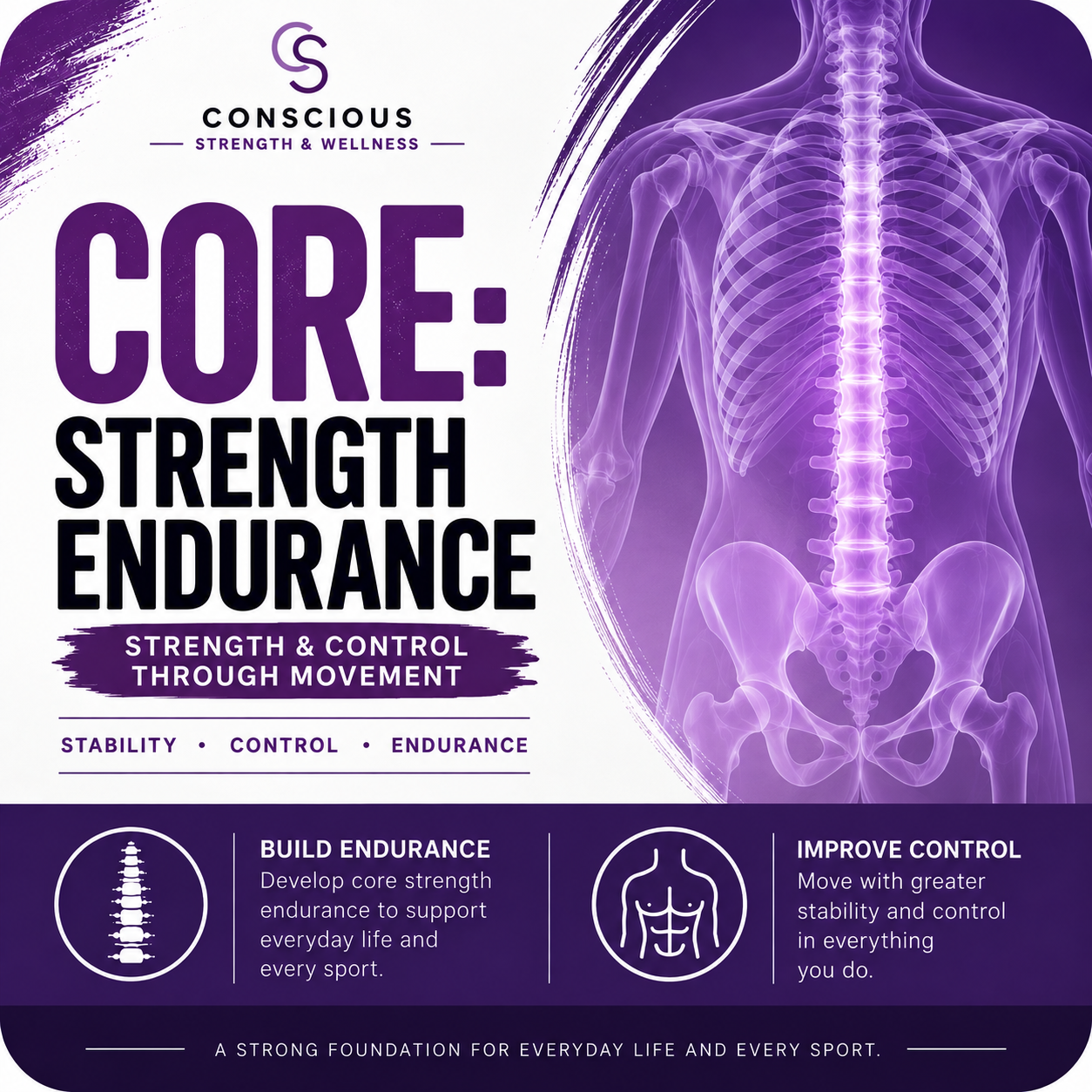
If you are only training your core with static holds, your body is completely unprotected the moment you move.
Traditional planks aren't enough. This program forces your core to adapt to real-world chaos by combining high-tension planks, explosive rotational movements, unilateral challenges, and unstable positions. We target the exact split-second windows where your spine and pelvis are most vulnerable to injury.
You aren’t just training core strength. You are bulletproofing your body against the micro-shifts that cause sudden back tweaks and joint inflammation.
The Consequences of Waiting:
The "Movement Leak": Without dynamic stability, your lower back absorbs the force that your core should be handling.
Rapid Muscle Fatigue: If your core stabilizers can't endure, your posture collapses halfway through your workout or workday.
Wasted Strength: An uncoordinated core acts like a broken link, bleeding power from your lifts and speed from your runs.
Train your core to do more than hold a position for 30 seconds. Train it to protect your life in motion.
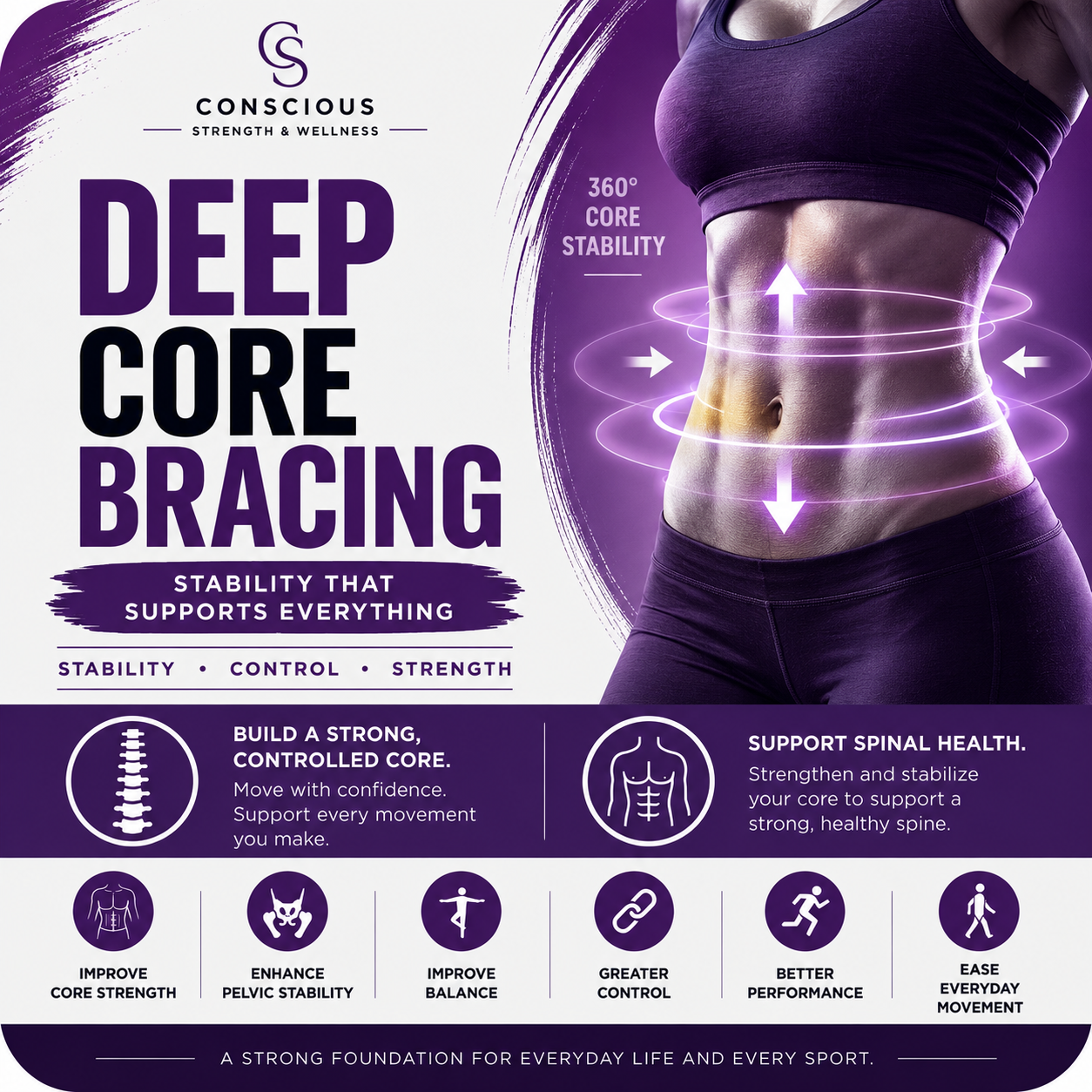
If you only train the surface muscles you can see in the mirror, your spine is essentially operating without a safety net.
Your deep core stabilizers are supposed to act as an internal weight belt. This program uses slow, high-tension, intentional movements to force those deep muscles to lock down and protect your spine before you move your arms and legs. Without this deep bracing system online, every daily movement becomes an active threat to your lower back.
Why You Cannot Afford to Wait:
The "Daily Tweak" Threat: Carrying groceries, lifting laundry baskets, or putting objects on an overhead shelf shouldn't cause back stiffness. This program stops your spine from absorbing those daily micro-shocks.
Athletic Power Leaks: For lifters, runners, and athletes, a weak deep core is a bottleneck. It bleeds away your leg power and arm strength, killing your performance numbers.
Degrading Spinal Alignment: When deep stabilizers fail, your posture collapses under fatigue, causing chronic neck, hip, and lower back aches.
Whether you are trying to smash a lifting personal record or simply want to walk your dog without a nagging ache in your lower back, you need to build a foundation that protects you. This is how.
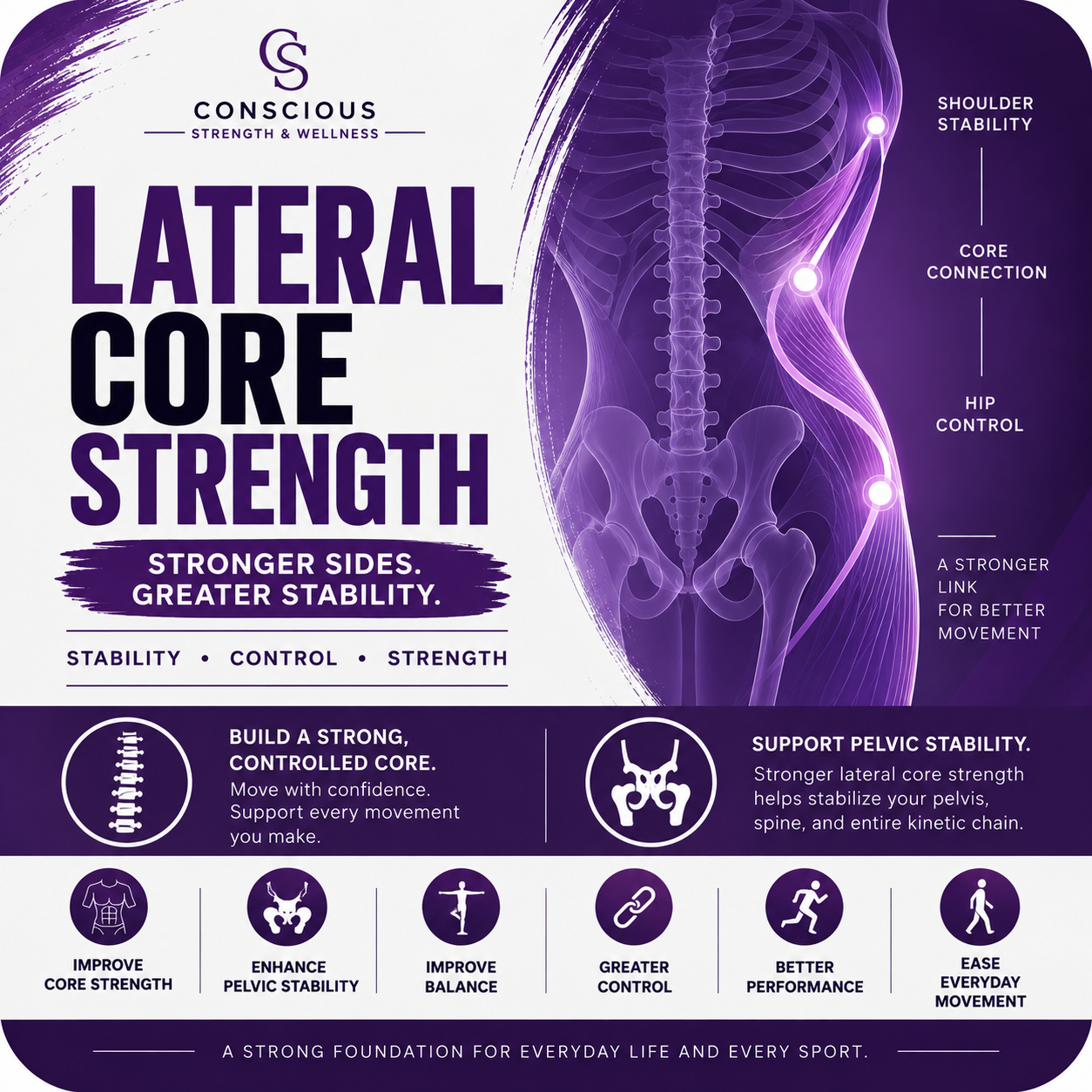
If your core training only focuses on moving forward and backward, you are completely unprotected against the side-to-side forces that wreck your joints.
Every time you take a step, run, change direction, or carry something heavy in one hand, your body fights gravity to keep from collapsing sideways. Without lateral core strength, your hips drop, your knees cave in, and your lower back pinches to handle the load. This program uses targeted side-plank variations, rows, and elite Copenhagen work to build an unyielding side shield.
Why You Cannot Afford to Ignore Your Lateral Core: you’ll eliminate the micro-collapses in your hips and knees every time your weight shifts from one foot to the other; you’ll strengthen the diagonal chain linking your shoulder, trunk, and opposite hip so your body transfers force seamlessly without buckling; you’ll be able to run, hike, or walk the dog with absolute balance, preventing the sudden slips and fatigue that cause chronic aches.
A core that can only hold a basic front plank is incomplete. Build a 360-degree armor that protects your body from every single angle.
Core strength isn’t about how hard your abs can contract. It’s about whether your spine stays protected when outside forces are trying to pull your body out of alignment.
By forcing your core to stabilize while your limbs move, your balance is tested, and uneven weights pull you from different angles.
Instead of training muscles in isolation, you’ll train your core, hips, shoulders, and spine to fight back as one unified shield.
The Real-World Risks of Weak Stability Under Load:
The "Uneven Load" Trap: Carrying a heavy bag on one side or walking a pulling dog turns into a sudden lower back tweak because your spine buckles under uneven weight.
Slashed Athletic Power: For runners and lifters, a shaky trunk acts like a sponge, bleeding away force and destroying your lifting numbers or stride efficiency.
Repetitive Joint Grind: Forcing your hips and spinal discs to absorb heavy impacts because your deep stabilizers fail the moment you shift your balance.