
Runner’s Strength & Performance
Great running starts from the ground up.
While I’ve highlighted targeted and specific routines here, all of the Lower Body Programs will give you the powerful lower-body foundation you need.
They are designed to build essential strength, stability, and power- without adding unnecessary bulk or size that could slow an endurance athlete down.
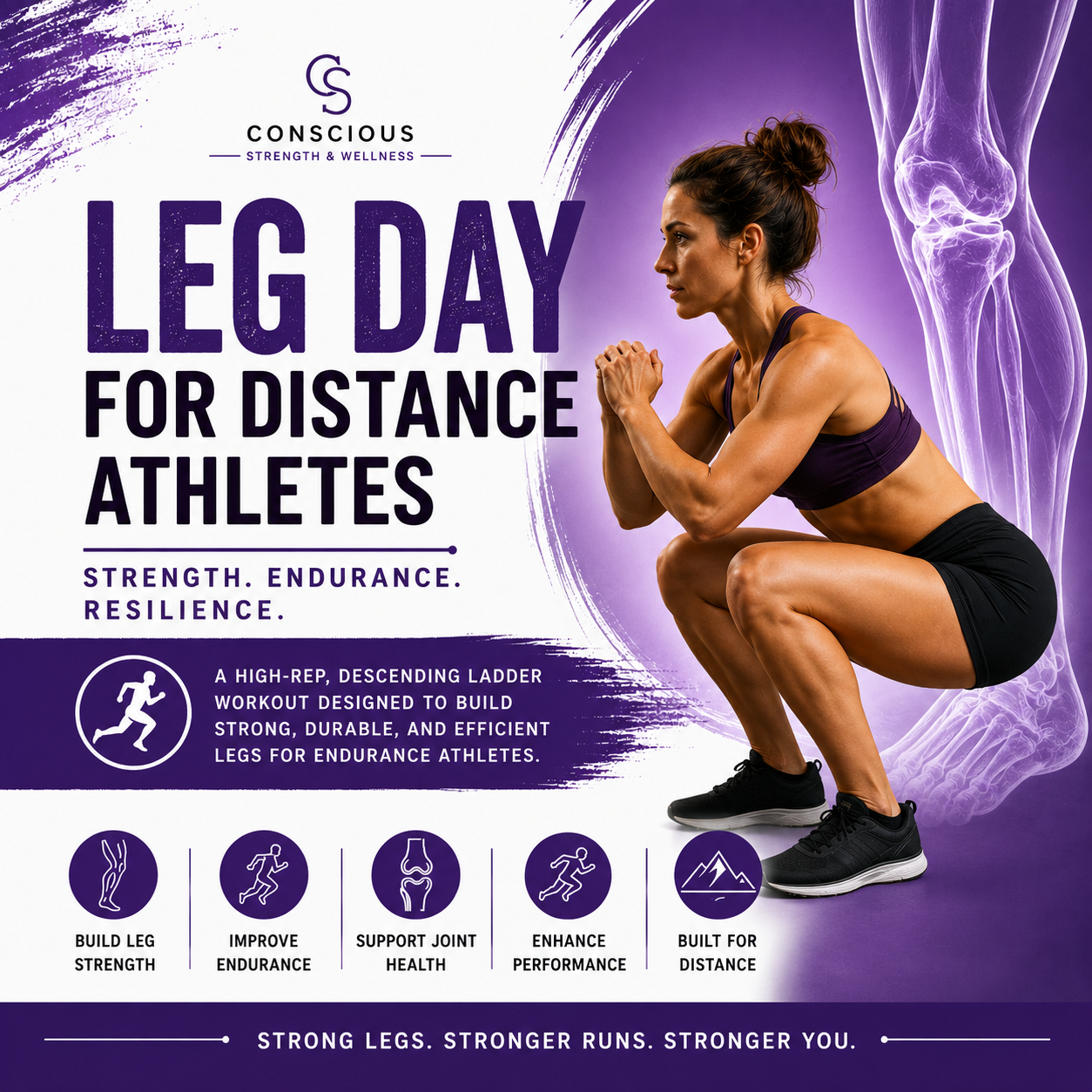
Leg Day for Distance Athletes is a high-rep, descending ladder workout designed to build the strength, muscular endurance, and single-leg stability that runners and endurance athletes need to perform their best.
Each exercise develops stronger legs while challenging balance, coordination, and fatigue resistance.
As the reps decrease, the intensity rises, pushing your muscles to keep producing quality movement even when they're tired, just like they have to during a race.
Whether you're training for your next marathon, improving trail performance, or simply building legs that can go the distance, this workout will help you become stronger, more durable, and more efficient with every step.

Runner's Warm Up is a quick, targeted activation circuit designed to wake up the hips, gluteus medius, and hip flexors before you run.
These muscles play a critical role in stabilizing the pelvis, controlling single-leg balance, and maintaining a strong stable stride.
When they're activated before your run, your body is better prepared to absorb force, transfer power, and move with greater control.
In this circuit, you'll prime the muscles that support better mechanics, stronger running, and more confident movement so you can spend less time feeling stiff and more time running strong.
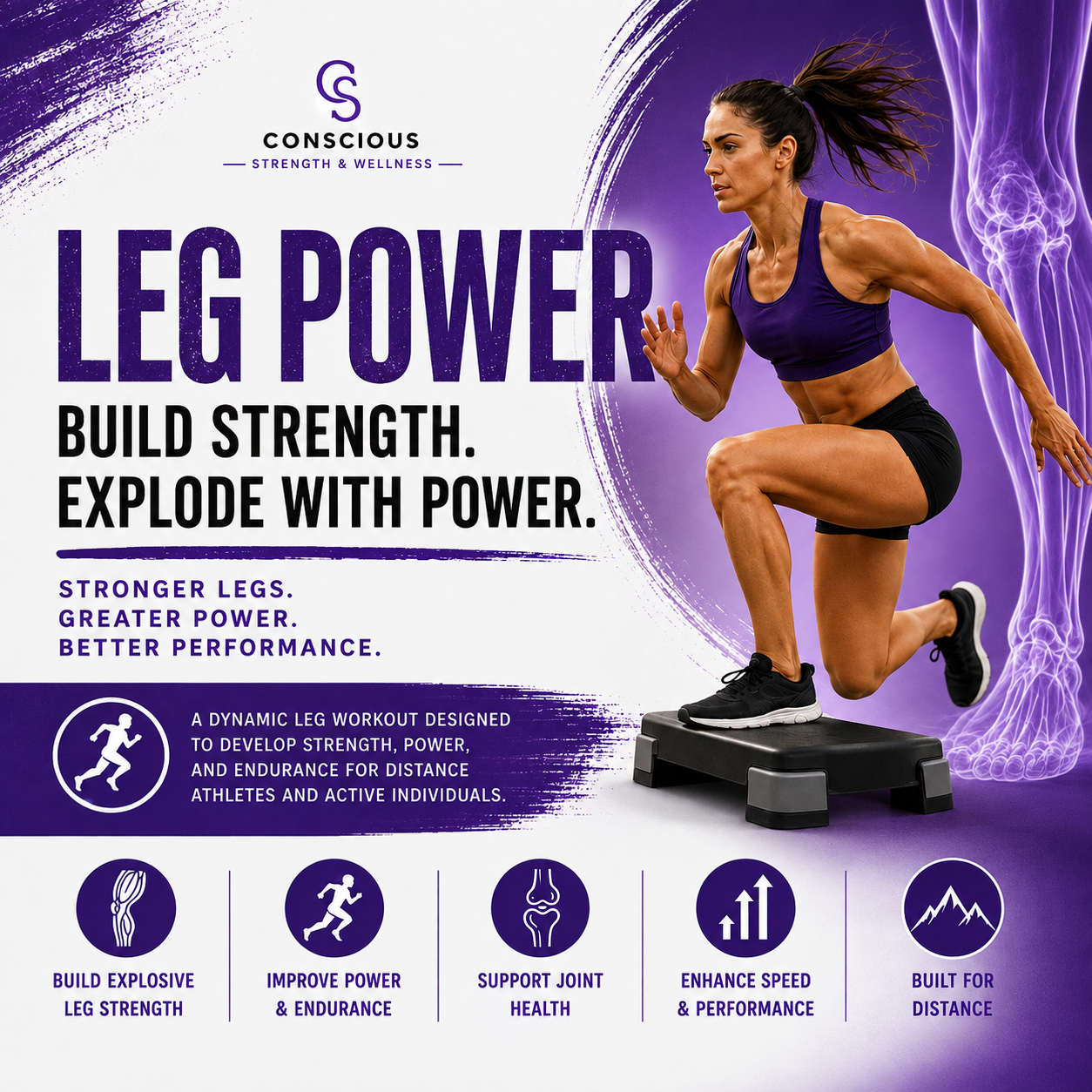
Strength is only part of the equation. To run faster and finish stronger, your body has to learn to produce force quickly.
Leg Power uses contrast training, a proven method that pairs a heavy strength exercise with an explosive movement.
The heavy lift recruits your highest-threshold muscle fibers and primes your nervous system, while the explosive exercise immediately teaches your body to apply that newly recruited strength with speed and precision.
The result is greater force production, improved rate of force development, and more powerful movement.
This workout will improve acceleration, hill climbing, running economy, and the ability to maintain powerful stride mechanics as fatigue begins to set in.
The program also emphasizes unilateral (single-leg) strength and offset loading to challenge balance, pelvic stability, and force transfer.
Whether you're training for faster race times, stronger trail climbs, improved athletic performance, or simply want legs that are stronger, quicker, and more capable, Leg Power develops the combination of strength and explosiveness that turns hard work into real-world performance.
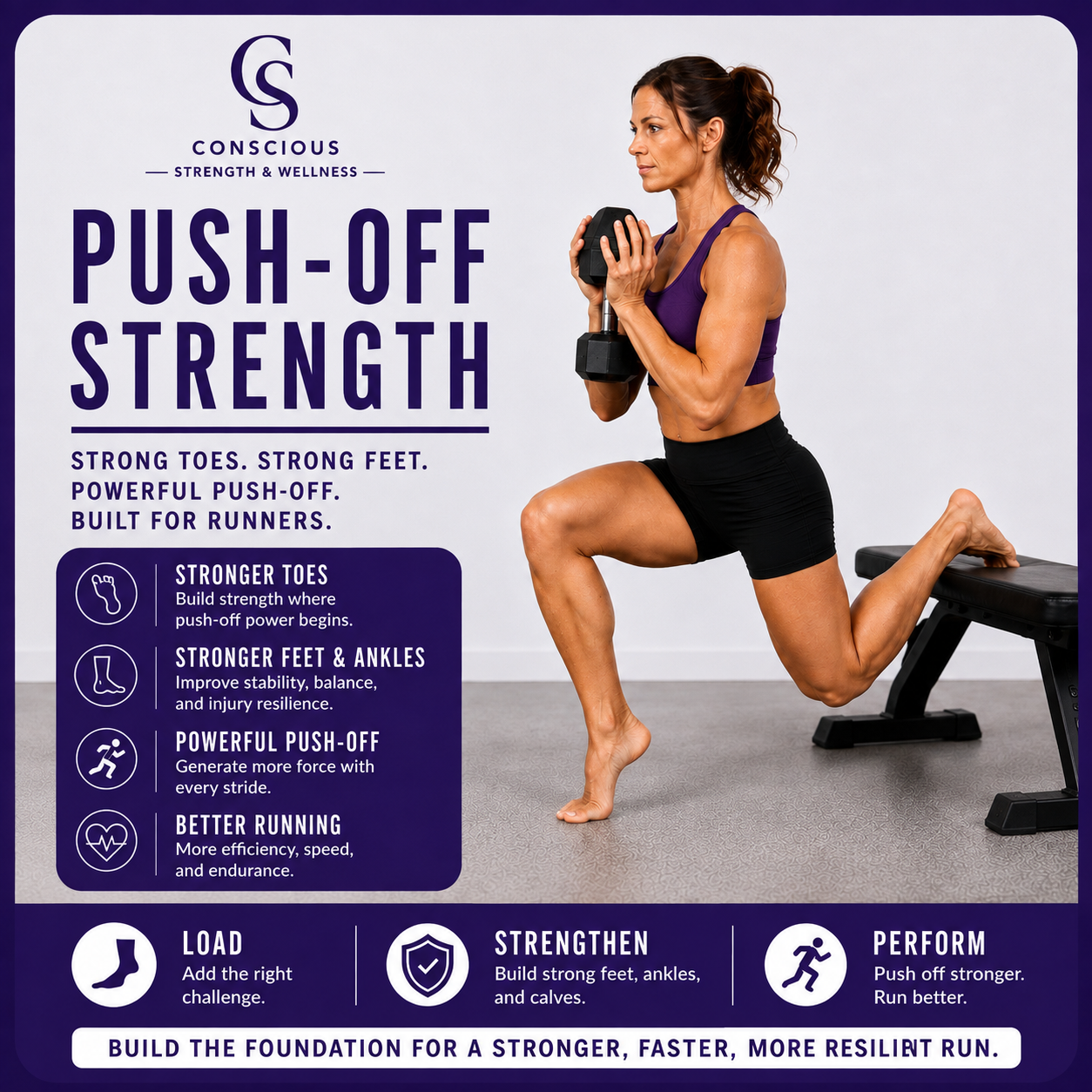
Push-Off Strength is designed to strengthen the final link between your body and the ground: your toes, feet, ankles, and calves.
When your feet, toes, ankles, and calves lack the strength to manage and produce force, other areas have to compensate. Push-off can become less powerful, running economy can suffer, and more stress can travel up the chain to the knees, hips, and lower back. As mileage or intensity increases, that weakness can also show up as pain in the feet, ankles, knees, hips, or low back, as well as reduced running ability.
Every running stride ends with a push-off. Your foot has to create a stable platform, your big toe has to tolerate and transfer force, and your calf and ankle complex has to help propel you forward into the next stride.
When that foundation lacks strength, you can lose force where it matters most: right at the ground.
This program progressively loads the toes, feet, ankles, and calves through calf raises, tip-toe strength work, single-leg movements, and plyometrics to build strength that carries directly into your running stride.
The goal isn’t simply stronger feet and calves.
It’s a stronger connection to the ground so you can absorb force, control it, and push back into the ground with more power.
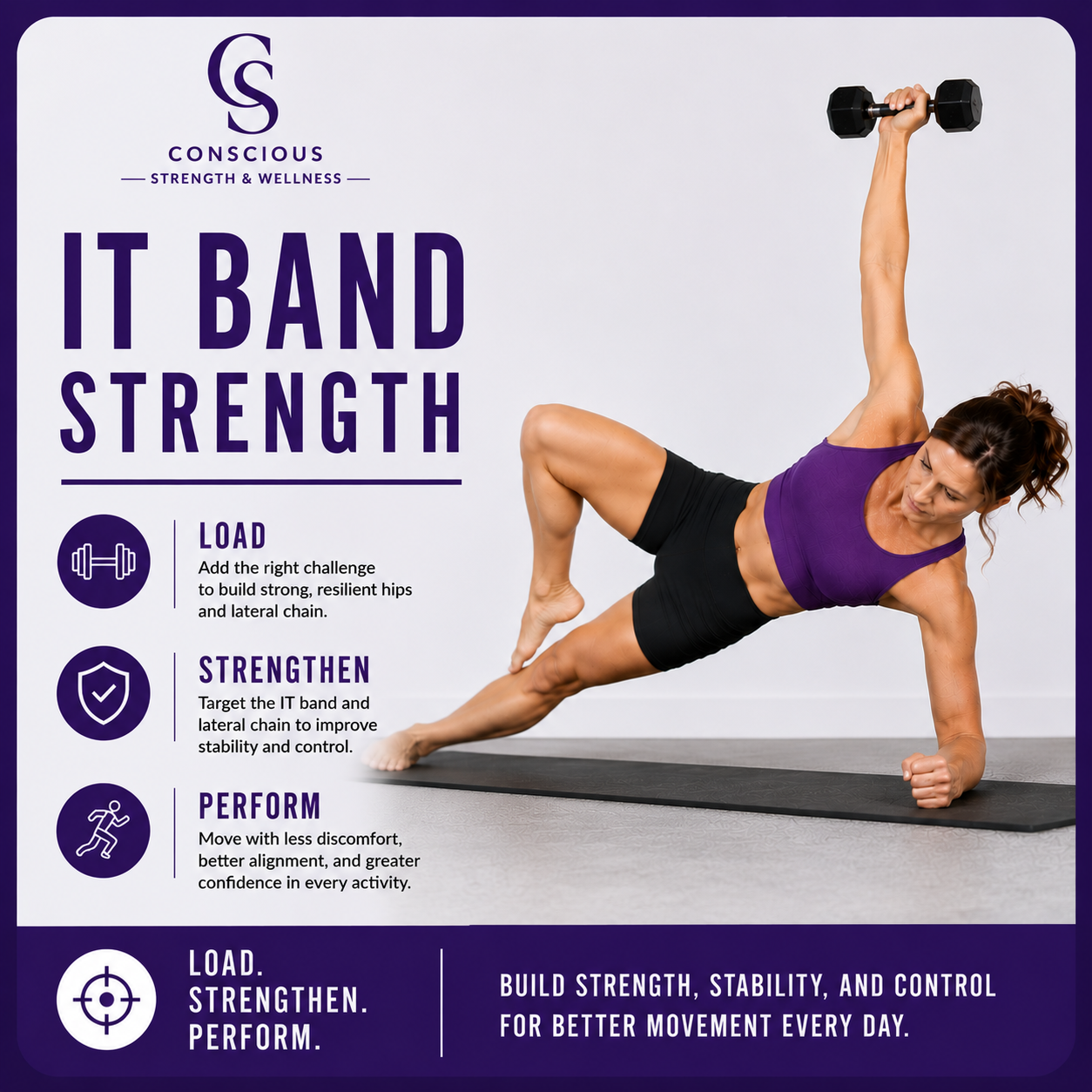
The IT band doesn’t need to be stretched. It needs strength.
Though the IT band isn’t a muscle or a tendon you CAN strengthen it by LOADING it like you would a muscle or tendon.
IT strength matters because every time you walk, run, climb stairs, land, or balance on one leg, the lateral hip and thigh have to help stabilize your pelvis and control your leg.
When that system doesn’t have enough strength or capacity for the demands you’re placing on it, irritation can show up along the outside of the hip, thigh, or knee - especially as running mileage, hills, speed, or training volume increases.
That’s why this program isn’t about endlessly stretching or foam rolling the IT band.
It’s about LOAD.
The answer to IT band pain isn’t to stretch it more. It’s to become stronger.
LOAD. STRENGTHEN. PERFORM.